
- Home
- Treatments
- Gum care
Gum care
Treating bleeding, swollen or receding gums, with gum surgery where it is needed.
Signs you might need it
- Gums that bleed when you brush or floss.
- Gums that look red or puffy, or feel tender.
- Gums that seem to have pulled back, making the teeth look longer.
- Bad breath or a bad taste that does not clear, a tooth that feels loose, or gaps opening between teeth.
What happens, step by step
Examination
The doctor looks at the gums and measures the small pocket around each tooth with a fine probe, which shows how far the inflammation has gone. X-rays may be taken to see the bone that holds the teeth.
Scaling
Plaque and tartar are removed from the teeth and from just under the gum line. For inflamed gums (gingivitis) this, with good brushing, is usually the whole treatment.
Deeper cleaning where it is needed
Where the pockets are deeper and the bone has been affected (periodontitis), the root surfaces are cleaned more thoroughly, often one part of the mouth at a time over more than one appointment. Where treatment needs it, the area is numbed with a local anaesthetic before we start, and you can ask us to pause at any point.
Home care
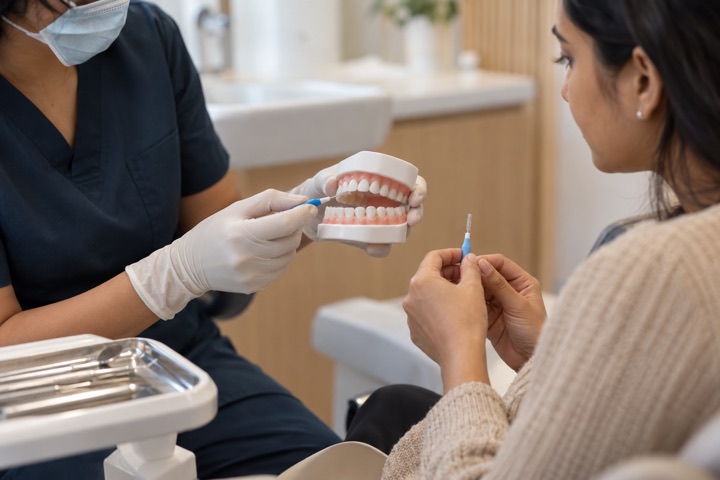
How to brush along the gum line, and how to clean between the teeth with interdental brushes or floss. This matters as much as anything done in the chair.
Checking again
The gums are checked again after some weeks to see how they have responded, and a maintenance interval is agreed.
How it feels afterwards
Gums may bleed a little and feel tender for a few days. As the swelling goes down, more of the tooth near the gum may be exposed and feel sensitive to cold for a while; this usually settles.
Inflamed gums usually recover well once the plaque is kept off. Where bone has already been lost, treatment aims to stop it getting worse; bone that has gone does not usually grow back.
What decides the cost
A fee is only worked out once the doctor has examined you. It depends on:
- How many teeth are involved, and how deep the pockets are.
- Whether a deeper clean is needed, and over how many visits.
- Whether a CBCT scan is taken.
- The cost is told to you in writing before anything is done.
If you are in pain and cannot reach the clinic, or you have swelling that is spreading, a fever, or difficulty swallowing or breathing, go to a hospital emergency department straight away.
What people ask about gum care
No. Bleeding is usually a sign of inflammation caused by plaque, and brushing gently but thoroughly along the gum line is part of the treatment. The bleeding usually lessens within a week or two of better cleaning. If it does not, come in.
Gum that has receded does not usually grow back on its own. Treatment aims to stop it going further. In some situations the exposed root can be covered; the doctor will say whether that applies to you.
Smoking and diabetes make gum disease more likely and harder to control, and some medicines affect the gums. Tell the doctor about any medical conditions and the medicines you take, so the plan takes them into account.
Something else? , or call +91 98676 77249.
Gums that bleed?
Tell the doctor how long it has been happening and what you have noticed, on a short call before you visit.